

Applied Mathematics
Human Machine Connection
Book Reviews
Philosophical Aesthetics
Quantum Computing
Global Value Chains
Global Complexity and Polycrisis²
Autonomous Intelligent Enterprise
Artificial Intelligence
Artificial Intelligence
National Ag Day 2026
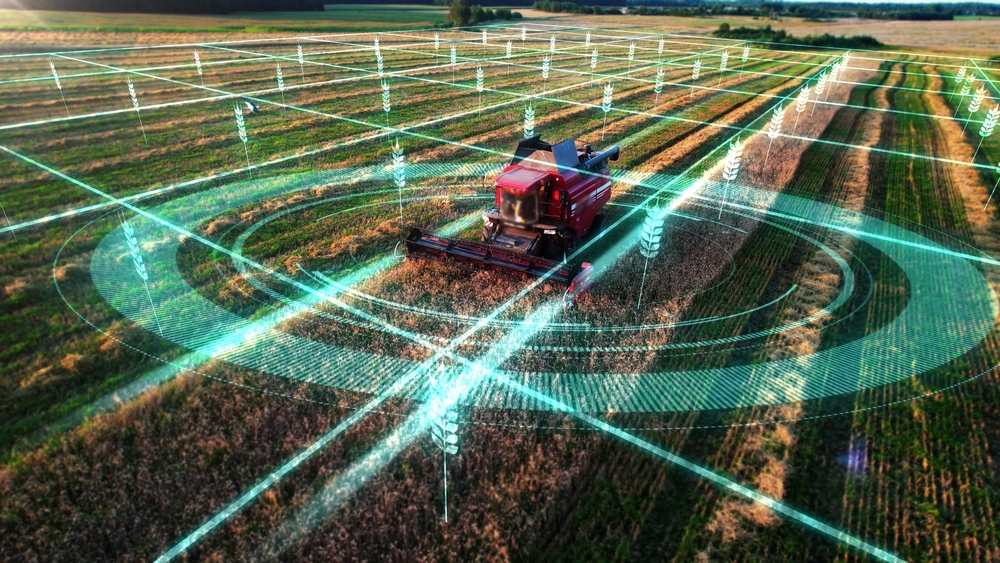
America's agricultural history spans 250 years, transforming from 95% manual labor to less than 2% of the population farming today, driven by technology and innovation that continues to evolve with AI.

Artificial Intelligence
The Global Value Chain Just Got a New Operating System. Most Companies Haven’t Installed It Yet.
Global tariff volatility creates "structural rewiring" of value chains. Traditional planning fails when rules change every 18 days. Winners deploy autonomous decision systems that re-optimize sourcing, pricing, and logistics within hours.

Artificial Intelligence
Humanoids in the Supply Chain
Humanoid robots face significant barriers before widespread supply chain adoption: technological limitations, integration complexity, high costs, and energy constraints. Market projected to reach $66 billion by 2032 despite current inefficiencies.

Artificial Intelligence
The Frameworks Are Breaking — And So Are the Systems Built on Top of Them
Three converging events reveal a single crisis: our strategic frameworks for managing complexity are failing just as AI systems become too opaque to govern. A five-part essay series exploring solutions launches next week.


Artificial Intelligence
From RAGs to Riches
RAG enhances large language models by connecting them to external, up-to-date data sources, improving accuracy, reducing hallucinations, and enabling cost-effective, domain-specific AI applications without requiring expensive model retraining.
.jpg)
Personal Dispatches: Reflections on today’s society through the lens of Fortune Magazine December 1941

Artificial Intelligence
Marketing and Artificial Intelligence
This article explores how artificial intelligence (AI) is transforming marketing. AI can analyze vast amounts of data to give marketers insights into customer preferences and behavior. This allows marketers to target customers more effectively, personalize experiences, and improve campaign performance. AI is still evolving, but it has the potential to revolutionize marketing.

Artificial Intelligence
China Takes the Lead in Multimodal Artificial Intelligence
This article discusses a new kind of artificial intelligence (AI) called multimodal AI. Unlike traditional AI, which focuses on one type of data (e.g., text, images), multimodal AI can process many data types together, as humans do. This allows for a more comprehensive understanding of the world. The article also mentions a race between the US and China in developing AI. China recently released a powerful multimodal AI model called WuDao 2.0, which may be more sophisticated than other systems.

Artificial Intelligence
Cognitive Technologies Can Help Fill Job Vacancies
The article explores the challenges of filling job openings as economies reopen. There's a high demand for AI expertise, including data scientists and machine learning engineers, to address labor shortages. While these jobs are in high demand, there's a lack of skilled workers. Cognitive technologies can help bridge this gap by automating some tasks and making data analysis more accessible to non-experts.

Artificial Intelligence
In AI, Common Sense Is Not All that Common
Artificial intelligence (AI) is making a big impact on marketing. It analyzes data to understand customers, allowing for targeted marketing, personalization, and better ad placement. This results in increased sales and customer satisfaction. Though complex, marketers don't need to be AI experts to leverage its benefits in marketing tools.