

Applied Mathematics
Human Machine Connection
Book Reviews
Philosophical Aesthetics
Quantum Computing
Global Value Chains
Global Complexity and Polycrisis²
Autonomous Intelligent Enterprise
Artificial Intelligence
Artificial Intelligence
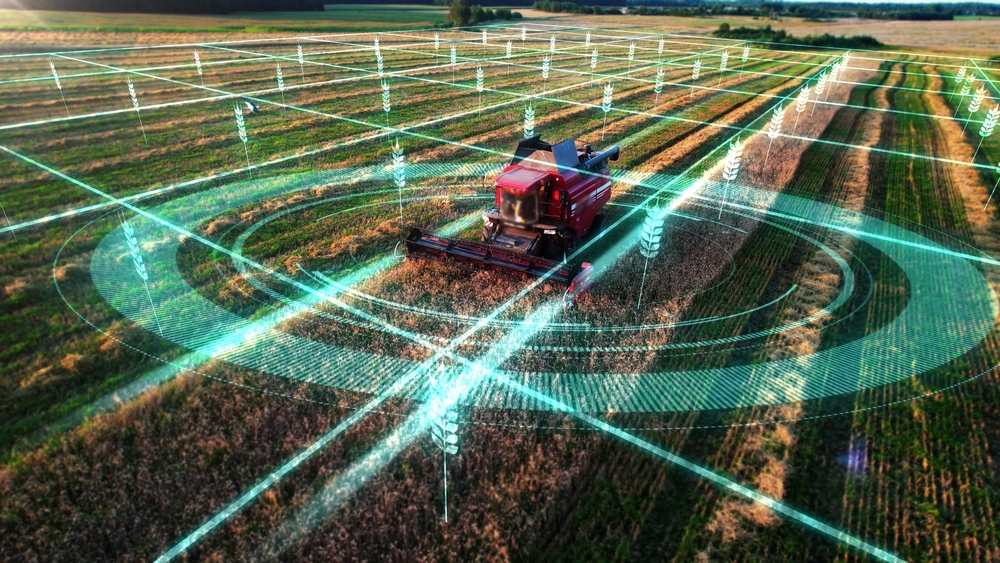
National Ag Day 2026
America's agricultural history spans 250 years, transforming from 95% manual labor to less than 2% of the population farming today, driven by technology and innovation that continues to evolve with AI.

Artificial Intelligence
The Global Value Chain Just Got a New Operating System. Most Companies Haven’t Installed It Yet.
Global tariff volatility creates "structural rewiring" of value chains. Traditional planning fails when rules change every 18 days. Winners deploy autonomous decision systems that re-optimize sourcing, pricing, and logistics within hours.

Artificial Intelligence
Humanoids in the Supply Chain
Humanoid robots face significant barriers before widespread supply chain adoption: technological limitations, integration complexity, high costs, and energy constraints. Market projected to reach $66 billion by 2032 despite current inefficiencies.

Artificial Intelligence
The Frameworks Are Breaking — And So Are the Systems Built on Top of Them
Three converging events reveal a single crisis: our strategic frameworks for managing complexity are failing just as AI systems become too opaque to govern. A five-part essay series exploring solutions launches next week.


Artificial Intelligence
From RAGs to Riches
RAG enhances large language models by connecting them to external, up-to-date data sources, improving accuracy, reducing hallucinations, and enabling cost-effective, domain-specific AI applications without requiring expensive model retraining.
.jpg)
Personal Dispatches: Reflections on today’s society through the lens of Fortune Magazine December 1941

Artificial Intelligence
Cognitive Computing and the Changing Business Landscape
This article discusses the value of cognitive technologies, which use AI techniques like machine learning to handle ambiguous situations. It highlights cognitive computing's ability to provide insights, support better decision-making, enable corporate alignment, and adapt to rapidly changing business environments through data analysis and integration.

Artificial Intelligence
Augmenting Business Decisions with Cognitive Technologies
This article discusses the concept of augmented intelligence, where AI and cognitive technologies augment and enhance human decision-making capabilities rather than replace them. It explores the benefits of this approach, such as resolving ambiguity, automating tasks, transforming employee roles, and introducing new job opportunities through human-machine collaboration.

Artificial Intelligence
Welcome to Ada Lovelace Day
This article discusses Ada Lovelace Day, celebrated annually to honor the achievements of women in STEM fields like Ada Lovelace, considered the first computer programmer. It also highlights the 2020 Nobel Prize in Chemistry awarded to Emmanuelle Charpentier and Jennifer A. Doudna for their groundbreaking gene editing technique CRISPR.

Artificial Intelligence
Decision-makers are Beginning to Appreciate the Value of Cognitive Computing
The article discusses cognitive computing, a type of AI that aims to mimic human thinking. It's distinct from traditional AI (machine learning) because it can handle ambiguity and uncertainty. Cognitive computing systems are adaptive, interactive, iterative, and contextual. They are designed to augment human decision-making, not replace it. Businesses can leverage cognitive computing to gain insights from data and improve decision-making. While AI can make predictions, human judgment is still critical for making final decisions.