

Applied Mathematics
Human Machine Connection
Book Reviews
Philosophical Aesthetics
Quantum Computing
Global Value Chains
Peace and Stability Operations
Autonomous Intelligent Enterprise
Artificial Intelligence

Global Value Chains
The K-shaped Economy is Not So Special
The K-shaped economy divides Americans: wealthy households thrive with asset appreciation while lower-income families face structural disadvantages. Top 10% now account for half of all consumer spending.

Global Value Chains
VUCA Is Dead. What Killed It — and What Comes Next — Matters More Than You Think
VUCA became outdated corporate wallpaper. BANI better names today's reality: brittle systems, anxious decisions, non-linear shocks, incomprehensible complexity. But behavioral responses alone aren't enough — engineered, mathematically rigorous systems are essential.
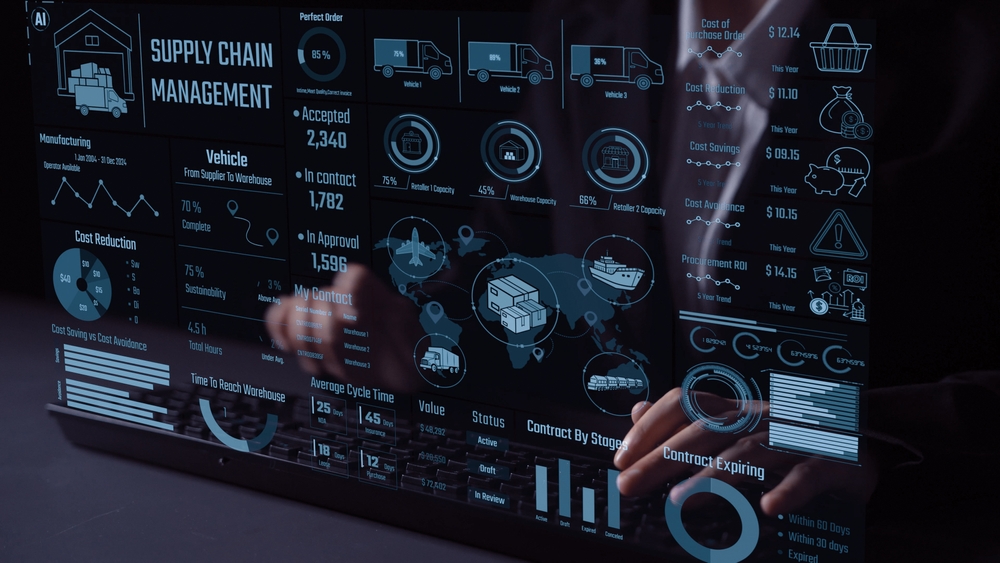
Global Value Chains
Supply Chain’s Digital Conundrum
Supply chains face escalating cybersecurity threats across logistics, fraud, and operational technology. Experts urge collaboration, proactive risk mapping, and AI-powered defenses to combat increasingly sophisticated, AI-driven attacks targeting interconnected global systems.

Global Value Chains
2026 Supply Chain Technology Trends
Modern supply chains must evolve from efficiency-focused to uncertainty-engineered systems. AI, scenario planning, autonomous agents, and workforce augmentation create connected networks that transform complexity into competitive intelligence through data collaboration.

Global Value Chains
Praise Cheeses!
Recent studies challenge cheese's unhealthy reputation, showing that daily consumption of about 1.5 ounces may reduce heart disease and stroke risk. High-fat cheese is also linked to lower dementia risk.

Global Value Chains
Cybersecurity: A Growing Supply Chain Risk
Cybersecurity emerges as supply chain's defining risk, with 70% of executives flagging threats by 2030. Supply chain interdependencies create vulnerabilities as digital and physical systems converge, demanding proactive defense strategies.
.jpg)
Personal Dispatches: Reflections on today’s society through the lens of Fortune Magazine December 1941

Global Value Chains
Supply Chains are Adversely Affected by Global Complexity
A study found that 83% of supply chain executives report negative impacts of globalization on business performance, mainly due to complexity and risk. The key to mitigating risk is better visibility throughout the supply chain. Implementing a global supply chain risk management program can help companies achieve this. The article also details 10 tips for getting started with such a program.

Global Value Chains
Supply Chains are Adversely Affected by Global Complexity
A study found that 83% of supply chain executives experience negative effects from globalization. The main challenge is complexity and risk caused by a long supply chain. The article suggests better visibility throughout the supply chain as a solution and provides 10 tips for implementing a global supply chain risk management program.

Global Value Chains
Kraft/Heinz Merger Highlights Need for Cognitive Value Chain™
The Kraft Heinz merger created a global food giant with cost-cutting ambitions. The article discusses the need for a Cognitive Value Chain to optimize operations, improve supply chain visibility, understand international preferences, enhance decision-making, and adapt marketing strategies in the digital age.
Global Value Chains
Kraft/Heinz Merger Highlights Need for Cognitive Value Chain™
Kraft Heinz, formed by merging Kraft and Heinz, aims for global sales but must consider international taste variations. Cognitive Value Chain, a system with features like predictive analytics, can help with challenges like these.